
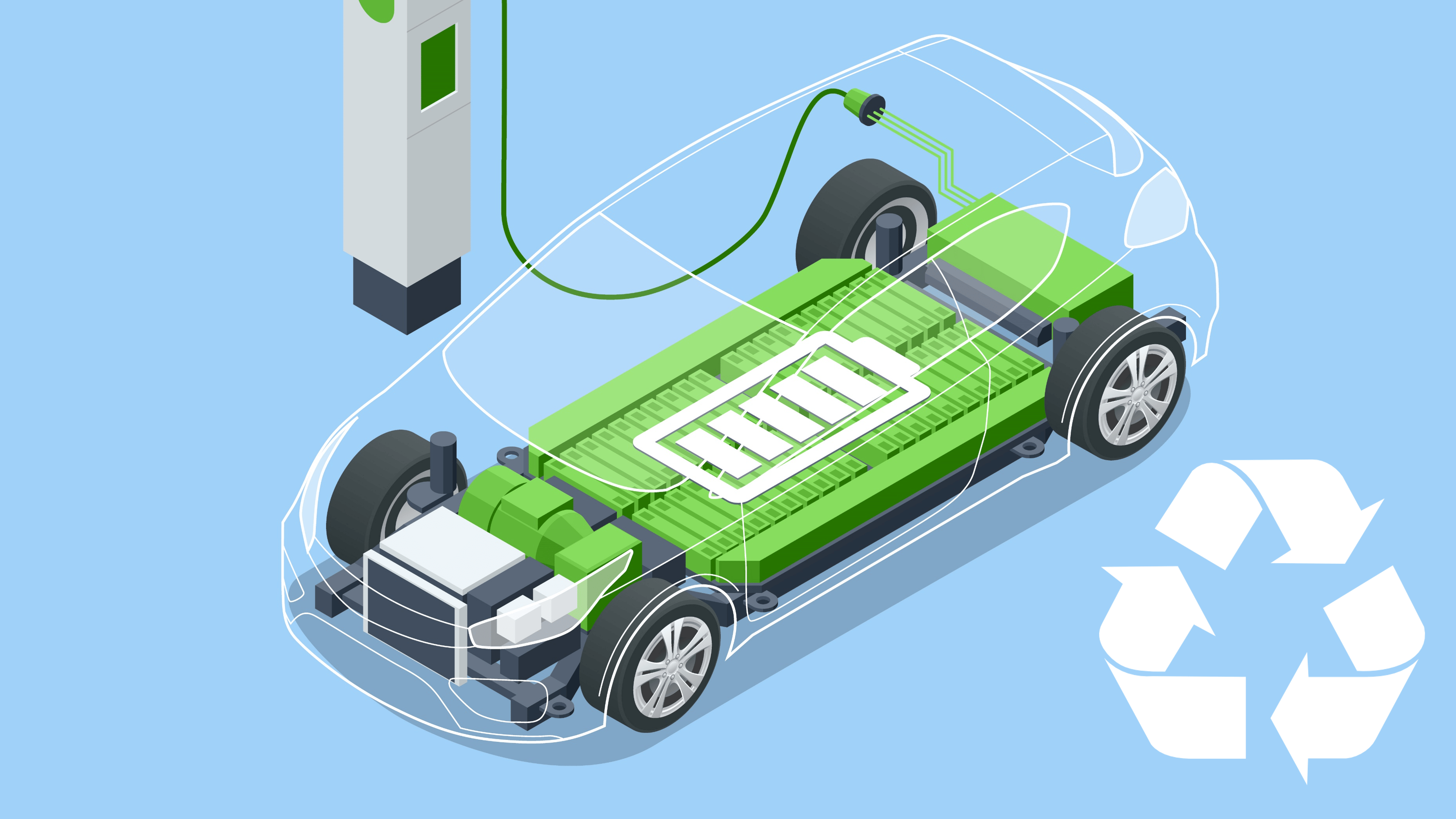
The Evolution of Closed-Loop Ecosystems
Redefining Waste as Urban Mining
The global perspective on end-of-life electric vehicle components is undergoing a radical transformation. What was once viewed as hazardous waste is now being re-evaluated as a valuable "urban mine." At the heart of this shift is the establishment of a robust circulation system designed to recover critical minerals—such as lithium, nickel, and cobalt—at exceptionally high purity levels. Historically, the technical barriers and high costs associated with extraction made this unfeasible. However, recent strides in engineering have elevated recovery rates to unprecedented levels, allowing these materials to be fed directly back into the manufacturing of new power units.
This transition to a circular model does more than just reduce the need for virgin resource extraction; it fundamentally alters the economic landscape of energy storage. By reclaiming materials, manufacturers can shield themselves from the volatile price fluctuations typical of raw commodity markets. We have reached a pivotal moment where economic rationality aligns perfectly with environmental stewardship. Companies are increasingly adopting vertical integration strategies, managing everything from the initial creation of the cell to its final reclamation. This shift ensures that resources are no longer consumed and discarded but are instead kept in a perpetual state of utility, marking the end of the "disposable" era and the beginning of a truly regenerative supply chain.
| Feature | Linear Economy Model | Circular Ecosystem Model |
|---|---|---|
| Resource Source | Virgin mining and extraction | Urban mining and recovery |
| Supply Chain Stability | High volatility, dependent on imports | Stable, localized material loops |
| Environmental Impact | High carbon footprint, landscape disruption | Reduced emissions, minimized waste |
| End-of-Life Value | Liability and disposal costs | Asset recovery and revenue generation |
| Material Flow | One-way (Mine -> Make -> Dispose) | Continuous loop (Make -> Use -> Recover -> Remake) |
Innovations in Reclamation and Processing
The actual methodology of extracting usable materials from spent units has seen a revolution in terms of both environmental safety and efficiency. Traditional pyrometallurgical methods often involved high-energy smelting or the use of aggressive solvents that posed significant wastewater challenges. Today, the focus has shifted toward advanced chemical processes that prioritize "zero-waste" outcomes. Researchers and engineers are deploying sophisticated techniques where chemical agents are recycled within the factory loop, and specialized catalysts are used to lower the energy threshold required for extraction.
This drive toward cleaner processing is critical for operating recycling facilities within regions that have strict environmental regulations. By significantly reducing water consumption and ensuring that even byproducts find a useful application, these modern facilities can operate in harmony with local communities. The goal is to create a process where the environmental cost of recovery does not negate the benefits of recycling. Furthermore, these advancements are allowing for the reclamation of a broader spectrum of materials, ensuring that as battery chemistries evolve—moving perhaps from nickel-heavy to iron-phosphate or sodium-based compositions—the infrastructure remains adaptable and efficient.
Extending Utility Through Second-Life Applications
From Propulsion to Stationary Storage
A common misconception regarding electric vehicles is the definition of a "dead" battery. In the automotive world, a power unit is often deemed retired when its capacity drops to approximately 70% or 80% of its original state. For a vehicle that requires high bursts of power for acceleration and long-range capabilities, this degradation is significant. However, viewed through the lens of general energy storage, these units are far from obsolete. They retain a substantial amount of their chemical capacity, making the immediate destruction of these units for raw material recovery an inefficient use of embodied energy.
The concept of "cascading use" suggests that before a battery is pulverized for its minerals, it should serve a second tour of duty. The most promising frontier for this is stationary grid storage. In these applications, the physical demands are drastically different; there is no need for rapid acceleration or weight minimization. Instead, the focus is on consistent, long-duration discharge. Used automotive packs can be repurposed to store excess energy generated by solar panels or wind turbines, releasing it during peak demand hours. This transition from "moving" to "storing" not only maximizes the return on the initial carbon investment made to produce the device but also provides a cost-effective solution for stabilizing renewable energy grids.
The Bridge to Final Recycling
Implementing a second-life strategy acts as a critical buffer in the supply chain. By extending the functional life of a battery by several years—or even a decade—in a stationary application, society delays the immediate need for recycling capacity while maximizing the utility of the extracted resources. This approach aligns with the hierarchy of waste management, where reuse is always preferable to recycling. It allows the recycling industry to scale up gradually, rather than being overwhelmed by a sudden tsunami of retired vehicles.
When these units finally reach the end of their second life, they are truly depleted. At this stage, they are sent to processing facilities. Because these units have been monitored during their stationary phase, recyclers often have better data regarding their chemical composition and internal health, streamlining the final material recovery process. This tiered approach ensures that we extract every possible joule of energy service from the device before reverting it to its elemental components.
| Application Context | Automotive Use (First Life) | Stationary Storage (Second Life) |
|---|---|---|
| Primary Requirement | High power density, rapid charging | Consistency, longevity, reliability |
| Stress Factors | Vibration, temperature swings, rapid discharge | Controlled environment, steady cycles |
| Capacity Threshold | Requires >80% capacity for range | Can operate efficiently at <80% capacity |
| Economic Value | Tied to vehicle performance and resale | Tied to energy arbitrage and grid stability |
Transparency and Institutional Frameworks
Digital Passports and Lifecycle Tracking
To support these complex logistical flows—from vehicle to grid to recycler—the industry is increasingly relying on digital traceability. The concept of a "battery passport" is gaining traction as a standard requirement. This digital twin records the entire history of the unit, including its chemical makeup, manufacturing origin, usage history, and state of health. Without this data, recyclers are effectively working blind, forced to test and analyze every incoming pack to determine whether it is suitable for reuse or if it must be shredded.
With a robust tracking system, the decision-making process becomes instantaneous and automated. A facility can scan a module and immediately know if it contains valuable cobalt that requires a specific extraction process, or if it uses a lithium-iron-phosphate chemistry that might be better suited for low-cost agricultural storage. This transparency is also crucial for safety, as it allows handlers to identify units that may have suffered physical damage or thermal stress during their service life. As regulations tighten, forcing manufacturers to prove the percentage of recycled content in their new products, these digital records will become the backbone of compliance and the primary tool for verifying sustainability claims.
Regulatory Pressures Driving Innovation
The rapid advancement in recovery technologies is not solely driven by market forces; it is heavily influenced by a shifting regulatory environment. Governments and international bodies are establishing frameworks that hold producers responsible for the entire lifecycle of their products. This "Extended Producer Responsibility" forces manufacturers to design for disassembly. If a car company knows it will be financially responsible for recycling the battery it sells today, it is far more likely to design that battery to be easily taken apart ten years from now.
These regulations are creating a fertile ground for investment. With mandated targets for material recovery rates and the usage of recycled content, the volatility and risk associated with investing in recycling infrastructure are diminished. We are seeing a convergence where policy, technology, and economics are locking together to prevent the unregulated disposal of electronic waste. This creates a predictable path for materials, ensuring that the lithium and nickel mined today will remain in the anthropogenic loop for generations, powering the clean transport systems of the future without requiring the constant exploitation of the Earth’s crust.
Q&A
-
What is hydrometallurgical recovery and how is it applied in the battery industry?
Hydrometallurgical recovery is a process used to extract valuable metals from battery materials through aqueous chemistry. This method involves leaching metals from crushed battery components using solvents, often resulting in high recovery rates of critical metals such as lithium, nickel, and cobalt. In the battery industry, this process is vital for recycling end-of-life batteries, reducing waste, and supporting the sustainable production of new batteries by recovering materials that can be reintroduced into the manufacturing cycle.
-
How does second life grid storage benefit from cell reclamation processes?
Second life grid storage utilizes batteries that are no longer suitable for primary use in vehicles but still have sufficient capacity for less demanding applications. Cell reclamation processes involve testing, sorting, and reconfiguring these cells to create efficient energy storage solutions. This not only extends the life of the battery materials but also provides an economical option for grid storage, stabilizing energy supply, and reducing the environmental impact of battery disposal.
-
Why is circular supply chain integration important in the context of battery recycling?
Circular supply chain integration is crucial as it ensures that materials are kept in use for as long as possible, reducing the demand for new resources and minimizing waste. In battery recycling, this integration involves the collection, processing, and reintegration of materials into new products. This approach helps in conserving natural resources, reducing carbon footprint, and promoting sustainability by creating a closed-loop system where end-of-life products are the starting point for new product manufacturing.
-
What role does thermal reconditioning play in battery recycling?
Thermal reconditioning involves the application of heat to rejuvenate battery cells, improving their performance and extending their lifespan. This process can help recover capacity in used batteries, making them suitable for secondary applications such as grid storage or in less demanding devices. By utilizing thermal reconditioning, companies can maximize the value extracted from used batteries, contributing to more sustainable battery lifecycle management.
-
How is battery material traceability achieved and why is it important?
Battery material traceability is achieved through the implementation of tracking systems and technologies, such as blockchain, that monitor the lifecycle of battery materials from extraction to end-of-life. This traceability is important because it ensures transparency and accountability in the supply chain, helping to verify the ethical sourcing of materials and compliance with environmental regulations. Additionally, it aids in optimizing recycling processes by providing detailed information on material composition and origin, facilitating more efficient and targeted recovery efforts.