
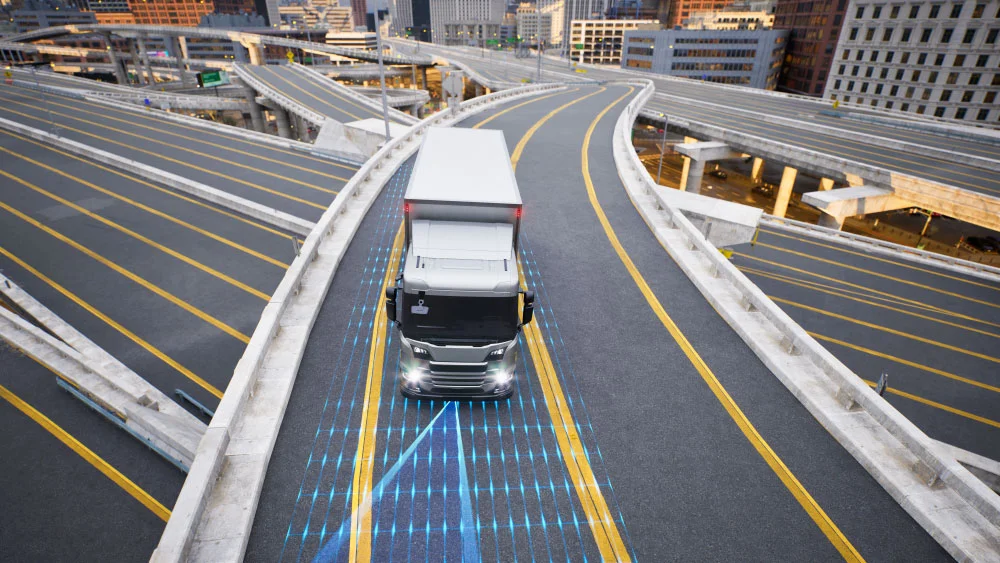
Enhancing Driver Perception and Maneuverability
The physical footprint of a commercial hauler naturally creates significant visibility challenges. Modern engineering has stepped in to dissolve these barriers, utilizing sophisticated sensor arrays to give operators a comprehensive digital picture of their surroundings. This goes beyond simple mirrors, offering a proactive shield against the common spatial limitations inherent in large-scale transport.
Eliminating the Hidden Zones
For decades, the area immediately flanking a large rig was a source of constant anxiety for operators and a danger zone for smaller passenger vehicles. The sheer length of the trailer often meant that entire cars could vanish from the driver's direct line of sight. Today, this issue is being aggressively tackled through the implementation of Blind Spot Monitoring for Trucks. This technology utilizes short-range radar sensors and cameras mounted along the chassis and cab to continuously scan adjacent lanes.
Unlike standard mirrors which require the driver to actively look and interpret, these systems are passive observers that become active warners. When a vehicle enters the detection zone, the system alerts the driver—often through a visual indicator on the A-pillar or an audible chime—specifically if the turn signal is activated. This creates a safety net during lane changes, one of the most critical maneuvers in highway driving. The technology has evolved to account for the varying lengths of trailers, automatically adjusting the sensor range to ensure the entire flank of the vehicle is covered. By removing the guesswork, drivers can merge with confidence, significantly reducing sideswipe incidents that occur simply because a smaller vehicle was effectively invisible to the human eye.
Mastering the Art of Reverse Motion
Maneuvering a seventy-foot combination vehicle backwards is widely considered one of the most difficult skills to master in the trucking profession. The articulation point between the cab and the trailer creates complex geometry that defies intuition. To address this, manufacturers have introduced Trailer Reverse Guidance Systems. These sophisticated aids do not drive the truck, but they provide the operator with critical visual information and predictive path modeling that was previously impossible to calculate on the fly.
Using high-definition cameras and steering angle sensors, these systems project the predicted path of the trailer onto a dashboard screen. As the driver turns the wheel, the digital guidelines curve to show exactly where the rear of the trailer will end up. Some advanced iterations even offer a "jackknife warning," alerting the driver if the angle between the tractor and trailer is becoming too acute, preventing costly damage to the equipment. This technology is particularly vital in crowded logistics yards or tight delivery docks where the margin for error is measured in inches. It democratizes skill, allowing newer drivers to park safely and efficiently while reducing the stress and time pressure often associated with final-mile delivery scenarios.
Critical Intervention Technologies
While perception is key, the ability of a vehicle to physically react to imminent danger is what saves lives when human reflexes fall short. The modern heavy vehicle is equipped with active intervention capabilities that can take control of braking and stability functions faster than any human operator, acting as a fail-safe against physics and unpredictability.
The Power of Autonomous Stopping
In the realm of heavy transport, momentum is the greatest adversary during an emergency. A fully loaded rig carries immense kinetic energy, requiring substantial distance to come to a halt. Automatic Emergency Braking has emerged as a cornerstone technology in mitigating rear-end collisions, which are among the most severe accidents involving commercial vehicles. This system operates by fusing data from long-range radar and forward-facing cameras to monitor the road ahead constantly.
If the system detects a slowing vehicle or a stationary object in the truck's path, it first issues a warning to the driver. If the driver fails to respond immediately, or applies insufficient braking force, the system intervenes. It can modulate the throttle and apply the foundation brakes with maximum pressure to reduce speed drastically. The sophisticated nature of these algorithms allows the truck to distinguish between a metallic overhead sign and a stopped car, minimizing false positives. The goal is not always to stop the truck completely—though it often can—but to scrub off enough speed so that if an impact does occur, the energy transfer is manageable, turning a potentially catastrophic event into a minor incident or avoiding it altogether.
| Feature Type | Primary Function | Driver Interaction Style | Safety Outcome Focus |
|---|---|---|---|
| Warning Systems | Detects hazards and alerts the operator via sound or light. | Passive: Requires the driver to take the physical corrective action. | Increases situational awareness and reaction time. |
| Intervention Systems | Detects imminent collisions and physically engages vehicle controls. | Active: Takes over throttle or brakes if the driver does not respond. | Reduces impact severity or prevents collision entirely. |
| Stability Augmentation | Monitors vehicle physics (roll, yaw) to prevent loss of control. | corrective: Micro-adjusts braking on individual wheels without driver input. | Prevents rollovers and jackknifing during sharp maneuvers. |
Maintaining Balance Under Load
The center of gravity in commercial hauling is dynamic; it shifts depending on the cargo, the terrain, and the speed of the vehicle. A sudden swerve to avoid an obstacle can easily escalate into a rollover or a jackknife situation. Stability Control for Loaded Trucks addresses this by acting as a digital gyroscope. Sensors placed throughout the tractor and trailer monitor parameters such as wheel speed, steering angle, and lateral acceleration hundreds of times per second.
When the system detects that the truck is moving in a way that does not align with the steering input—indicating a skid or an impending roll—it selectively applies brakes to individual wheels. For example, if the truck is understeering into a curve, the system might brake the inner rear wheels to pull the nose back into line. More importantly, during high-speed lane changes, it can reduce engine torque and apply the trailer brakes to keep the load aligned with the cab. This technology is largely invisible to the driver during normal operation but provides a critical safety margin during evasive maneuvers or when navigating slick, adverse weather conditions where the physical limits of traction are easily exceeded.
Fatigue Management and Lane Discipline
Long-haul driving is an endurance discipline. The monotony of highway driving can lead to a gradual decline in focus, resulting in unintentional lane drift or unsafe following distances. Automation in this sector is designed not to replace the driver, but to handle the repetitive micro-adjustments of driving, reducing cognitive load and preventing fatigue-related errors.
Staying the Course
One of the most insidious risks on the highway is the slow drift. A momentary lapse in attention can send a massive vehicle crossing into adjacent lanes or off the road entirely. Lane Keep Assist for Trucks moves beyond simple lane departure warnings. While earlier systems would simply buzz or beep when a tire crossed a lane marker, modern assist systems employ electric steering or differential braking to actively nudge the vehicle back toward the center of the lane.
This technology relies on cameras that read road markings in real-time. If the vehicle begins to drift without a turn signal active, the system provides gentle resistance through the steering column or applies a slight steering torque to correct the path. This creates a "virtual rail" sensation for the driver. It significantly reduces the physical effort required to keep the truck centered, especially during crosswinds or on crowned roads. By handling these minor corrections, the system preserves the driver's energy for more complex decision-making tasks, ensuring that they remain alert and focused over the duration of a long shift.
Smarter Distance Management
Maintaining a consistent safety gap requires constant throttle and brake modulation, which can be mentally exhausting in fluctuating traffic. Adaptive Cruise Control for Trucks revolutionizes this aspect of highway driving. Utilizing the same front-facing radar used for emergency braking, this system locks onto the vehicle ahead and automatically adjusts the truck's speed to maintain a pre-set following distance.
Unlike standard cruise control, which blindly maintains speed regardless of traffic flow, adaptive systems can decelerate the truck when traffic slows and accelerate back to the set speed when the lane clears. This is particularly beneficial in heavy congestion, where the "stop-and-go" nature of traffic usually causes significant driver fatigue. By automating the longitudinal control of the vehicle, the system ensures a safe buffer zone is always maintained, removing the temptation for drivers to tailgate and smoothing out the flow of traffic. This not only improves safety but also enhances fuel efficiency by eliminating erratic acceleration and braking patterns.
| Scenario | Standard Approach | Tech-Enhanced Approach | Primary Benefit |
|---|---|---|---|
| Monotonous Highway Driving | Driver manually adjusts speed and steering constantly to stay in lane. | Lane Keep Assist handles micro-steering; Adaptive Cruise manages speed. | Reduces physical fatigue and mental cognitive load. |
| Heavy Traffic Congestion | Constant pedal switching; high risk of rear-end collision due to distraction. | Automated speed matching and distancing; ready-to-act Emergency Braking. | Lowers stress levels and prevents low-speed impact damage. |
| Adverse Weather (Rain/Wind) | Driver relies solely on visual cues and manual reflexes to correct slides. | Stability Control detects invisible traction loss and corrects instantly. | Provides a digital safety net when human senses are impaired. |
Q&A
-
What is Blind Spot Monitoring for Trucks and how does it enhance safety?
Blind Spot Monitoring for Trucks is a technology that uses sensors and cameras to detect vehicles in the truck's blind spots. This system alerts the driver, usually with visual or auditory signals, when a vehicle is present in areas that are not easily visible. This enhances safety by reducing the risk of collisions during lane changes or merging maneuvers, which are particularly challenging for larger vehicles due to their size and limited visibility.
-
How does Lane Keep Assist for Trucks function and benefit drivers?
Lane Keep Assist for Trucks is a system designed to help drivers maintain their lane position. It uses cameras to monitor road markings and can provide steering input or warnings if the vehicle begins to unintentionally drift out of its lane. This technology benefits drivers by reducing fatigue, enhancing comfort on long journeys, and preventing accidents caused by unintentional lane departures.
-
What role does Automatic Emergency Braking play in truck safety?
Automatic Emergency Braking (AEB) for trucks is a critical safety feature that automatically applies the brakes when an imminent collision is detected. The system uses sensors and cameras to monitor the road ahead and react faster than a human driver in emergency situations. By reducing the stopping distance and potentially avoiding collisions, AEB can significantly lower the severity of accidents or prevent them altogether.
-
Can you explain how Trailer Reverse Guidance Systems assist truck drivers?
Trailer Reverse Guidance Systems provide drivers with visual aids and steering assistance when reversing with a trailer. The system typically uses cameras and sensors to give the driver a clear view of the trailer's path, often displayed on a screen inside the cabin. This assistance helps in aligning the trailer correctly, reducing the risk of accidents and making the task of reversing with a trailer easier and more precise.
-
Why is Stability Control important for Loaded Trucks, and how does it work?
Stability Control for Loaded Trucks is essential as it helps prevent rollovers and loss of control by automatically adjusting engine power and applying brakes to individual wheels. This system continuously monitors the vehicle's movement and detects potential instability, especially important when carrying heavy or uneven loads. By maintaining stability, it ensures safer handling and reduces the risk of accidents caused by abrupt maneuvers or adverse road conditions.
-
How does Adaptive Cruise Control for Trucks differ from standard cruise control?
Adaptive Cruise Control for Trucks is an advanced version of standard cruise control that not only maintains a set speed but also adjusts the speed based on the traffic conditions ahead. It uses radar and sensors to monitor the distance to the vehicle in front, automatically slowing down and speeding up to maintain a safe following distance. This feature enhances driver convenience and safety, particularly in stop-and-go traffic situations, by reducing driver workload and minimizing the risk of rear-end collisions.