
The Invisible Risks of Connected Mobility
From Mechanical Machines to Digital Targets
The modern automobile has undergone a metamorphosis, evolving from a purely mechanical assembly of pistons and gears into what is essentially a sophisticated smartphone on wheels. This transition brings undeniable conveniences; features like remote diagnostics and automated wireless updates allow manufacturers to improve vehicle performance without a visit to the dealership. However, this constant state of connectivity opens a digital doorway that was previously nonexistent. In the past, stealing a car required physical force or hotwiring. Today, the vulnerabilities lie in lines of code and wireless signals.
The integration of infotainment systems and telematics units, which manage everything from navigation to music streaming, creates a bridge between the car’s internal network and the outside world. If these communication channels lack rigorous protection, they become attractive entry points for cybercriminals. The danger is not merely theoretical; researchers have demonstrated the ability to pivot from a compromised entertainment system to critical control units, theoretically allowing remote manipulation of door locks or even steering mechanisms. Furthermore, the convenience of keyless entry systems has introduced "relay attacks," where thieves amplify the signal from a key fob inside a house to unlock and steal a car from the driveway without ever touching a key.
Beyond theft, the integrity of the driving experience itself relies on trust in the vehicle's senses. Electric vehicles depend on a complex array of LIDAR, radar, and cameras to perceive their environment. A technique known as signal spoofing involves feeding these sensors false information—convincing the car that an obstacle exists where there is none, or blinding it to a real danger. Ensuring that the vehicle can verify the authenticity of the data it receives is no longer just an IT issue; it is a fundamental safety requirement equivalent to the reliability of physical brakes.
| Vulnerability Point | Potential Threat Vector | Safety Impact |
|---|---|---|
| Keyless Entry | Signal amplification or relay attacks | Vehicle theft without physical break-in |
| Infotainment System | Malware entry via rogue apps or Bluetooth | Privacy theft (contacts, GPS) or bridge to control systems |
| External Sensors | Signal spoofing or "blinding" | Erroneous braking, steering, or failure to detect obstacles |
| Mobile Companion Apps | API breaches or weak authentication | Remote unauthorized access to cabin climate or location data |
Fortifying the Ecosystem Beyond the Chassis
Securing the Supply Chain and Infrastructure
Securing an electric vehicle requires looking far beyond the sheet metal of the car itself. A single EV is the result of a massive, global supply chain involving thousands of hardware components and millions of lines of software code provided by hundreds of different vendors. If a single supplier delivers a component with a hidden security flaw, that vulnerability becomes a "backdoor" into the entire vehicle’s ecosystem. This necessitates a defense strategy that assumes no component is inherently safe, requiring strict isolation mechanisms that prevent a breach in a non-critical system, like the radio, from spreading to life-critical systems like the engine or battery management.
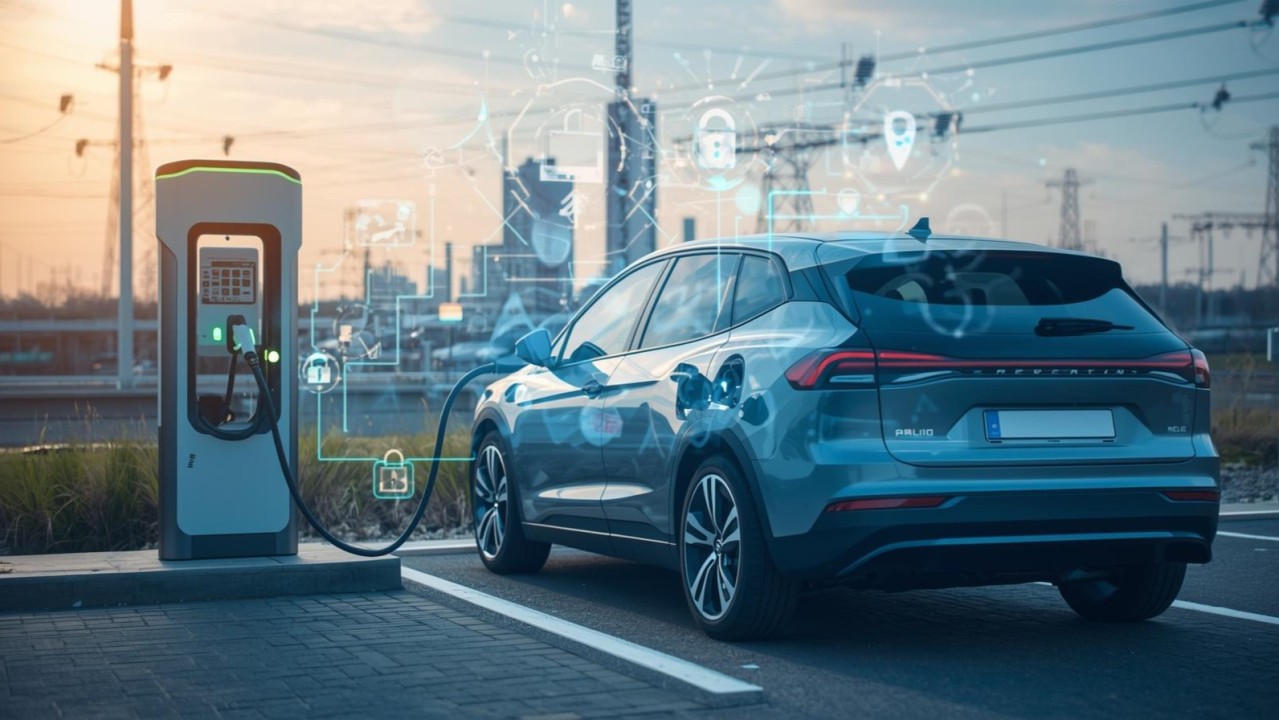
The vulnerability extends to the charging infrastructure that powers these fleets. Public charging stations are physical connection points where data and electricity flow simultaneously. When a vehicle plugs in, it doesn't just draw power; it communicates its identity, battery status, and payment information to the grid. Without robust encryption on these communication lines, malicious actors could potentially intercept private data or introduce malware into the vehicle’s system during the "handshake" process. For commercial fleet operators, the risk is exponential; a compromised charging network could theoretically be used to deploy ransomware that immobilizes an entire fleet of delivery trucks, causing massive economic disruption.
To combat this, the industry is moving toward trusted execution environments where critical operations are handled by dedicated hardware chips designed solely for security. These chips store cryptographic keys and manage the verification of all incoming and outgoing data, ensuring that the vehicle only talks to authorized chargers and servers. This approach creates a digital "chain of trust" that extends from the factory floor to the public charging station, ensuring that the infrastructure supporting the EV revolution is as resilient as the vehicles themselves.
The Era of Intelligent and Autonomous Defense
Real-Time Verification and Edge Computing
As cyber threats become more automated and sophisticated, the traditional "patch and pray" method—waiting for a vulnerability to be found and then fixing it—is no longer sufficient. Attackers now use automated tools to scan for weaknesses at machine speed, meaning the defense mechanisms must also operate in real-time. This has led to the adoption of intelligent monitoring systems that live directly on the vehicle's high-performance computer chips. Rather than sending all data to a cloud server for analysis, which introduces dangerous latency, modern EVs are utilizing edge computing to process security decisions locally.
These advanced algorithms act as a digital immune system. They establish a baseline of "normal" behavior for the vehicle—knowing exactly how the steering module should talk to the braking system. If an anomaly is detected, such as a command sequence that violates established safety logic or an unauthorized transmission frequency, the system can instantaneously isolate the affected segment. This capability is vital because, in a moving vehicle, a delay of even a few milliseconds to verify a command via the cloud could result in a physical accident. By keeping the decision-making logic on the car itself, manufacturers ensure that safety protocols remain active even when the vehicle drives through a tunnel or loses cellular connectivity.
Furthermore, the development process is evolving through the use of "digital twins"—virtual replicas of the vehicle’s software architecture. Before a car ever hits the road, its digital twin is subjected to thousands of simulated cyberattacks to identify weak points. This proactive approach allows engineers to design resilient architectures that can withstand attacks that haven't even been invented yet. By combining rigorous pre-production testing with autonomous, on-board defense systems, the automotive industry is working to ensure that our digital driving future remains safe from interference.
| Defense Approach | Methodology | Primary Benefit |
|---|---|---|
| Reactive Patching | Fixes vulnerabilities after they are discovered | Addresses known bugs but leaves a window of exposure |
| Digital Twin Testing | Simulates attacks in a virtual environment before launch | Identifies design flaws early without physical risk |
| Edge-Based Defense | Processes security data locally on the vehicle chip | Zero latency response; works without internet connection |
| Cloud Analytics | Aggregates fleet-wide data to find patterns | Identifies large-scale trends and new global threat types |
Q&A
-
What are Secure OTA Protocols and why are they important?
Secure Over-the-Air (OTA) Protocols are essential for updating software on remote devices without physical access. They ensure that the data transmitted is protected against unauthorized access and tampering, maintaining the integrity and security of the device's software. This is crucial for devices like smartphones and IoT devices, where updates need to be both secure and reliable to prevent vulnerabilities.
-
How do Intrusion Detection Algorithms enhance cybersecurity?
Intrusion Detection Algorithms are designed to identify and respond to potential security threats within a network. By analyzing traffic patterns and recognizing abnormal behavior, these algorithms can detect potential intrusions before they cause harm. This proactive approach is vital for maintaining the security of sensitive data and ensuring that networks remain uncompromised.
-
What role does Encrypted V2X Communication play in automotive security?
Encrypted Vehicle-to-Everything (V2X) Communication ensures secure exchanges of information between vehicles and their environment, including other vehicles, infrastructure, and pedestrians. By encrypting these communications, it prevents eavesdropping and tampering, which is critical for the safety and reliability of connected and autonomous vehicles.
-
Why are Hardware Security Modules important for data protection?
Hardware Security Modules (HSMs) provide a physical device for securing cryptographic keys and performing encryption/decryption processes. They are critical for protecting sensitive information by offering a secure environment resistant to tampering and unauthorized access. HSMs are widely used in industries like finance and healthcare, where data integrity and confidentiality are paramount.
-
How does Software Sandbox Isolation contribute to system security?
Software Sandbox Isolation creates a controlled environment where applications can run securely, isolated from the rest of the system. This prevents malicious software from affecting other parts of the system, ensuring that potential threats are contained and do not compromise overall system security. It's particularly useful in testing new software and running untrusted applications safely.
-
What is Critical Sensor Authentication and its significance in security systems?
Critical Sensor Authentication involves verifying the authenticity and integrity of data received from sensors, ensuring that it has not been tampered with. This is crucial in systems where sensor data is used for decision-making, such as in autonomous vehicles and industrial control systems. Reliable sensor data authentication helps prevent false data injection attacks and maintains the overall reliability of the system.